

Your partner raises their voice, and you either raise yours back, go quiet, or start listing every reason you are right. None of these reactions happen by accident. Each one comes from a pattern your brain built long before this relationship even started. A quiz to know your communication style under stress can finally put a name to that pattern, and once you see it clearly, arguments stop feeling random.
Stress does not create a new personality. It simply strips away the polish and shows the wiring underneath. Learning that wiring is the fastest way to stop repeating the same fight with a different topic attached to it. If this kind of self discovery interests you, toolshubb.com has an entire library of quizzes built around this exact idea.
Here is our detailed information about quiz to find your ideal long term partner read our latest blog.
Key Takeaways
| What You Will Learn | Why It Matters |
|---|---|
| The four main communication styles under stress | Helps you recognize your default reaction before it takes over |
| How stress physically changes the brain during conflict | Explains why smart, loving people still say hurtful things mid argument |
| Real numbers from recent relationship research | Shows you are not alone and this pattern is measurable |
| A free 5 question conflict communication style quiz | Gives you a quick, shareable result you can discuss with your partner |
| Practical steps to shift your response in the moment | Turns awareness into an actual skill you can use tonight |
Why Stress Changes the Way We Talk to Each Other
Most people communicate with patience and nuance under normal conditions. The moment stress enters the room, that nuance often disappears within seconds. This is not a character flaw, and it is simply biology doing exactly what it evolved to do.
The amygdala treats a raised eyebrow the same way it once treated a physical threat. Blood flow shifts away from the prefrontal cortex, the part responsible for careful reasoning. It moves instead toward the muscles and reflexes needed for quick action. So a calm, articulate person can suddenly sound clipped, sarcastic, or completely silent during an argument with someone they love.
Recent research backs this up with real numbers. A study highlighted by the American Psychological Association found that 75 percent of people struggle to communicate well during high stress situations. Workplace data from 2025 shows a similar pattern, with 83 percent of employees reporting ongoing stress while only 13 percent feel comfortable disclosing it.
The Body Keeps Score During Arguments
Physiological researchers have long tracked what happens inside the body during conflict, not just what comes out of the mouth. Heart rate spikes, breathing shortens, and words get chosen by instinct rather than intention. This is often called flooding, and it explains why a five minute disagreement can feel like it lasted an hour.
Specific words barely matter once flooding sets in. Tone and body language carry the entire message instead. That is exactly why a stress response personality test for relationships focuses less on what you say and more on how you react when your nervous system is overloaded.
To get a better understanding of quiz to discover how independent you are in relationships our guide breaks down exactly what to expect.
The Four Stress Communication Styles You Might Recognize
Decades of relationship research point toward a handful of recurring patterns. Every person is unique, yet most reactions under pressure fall into one of four broad styles. Spotting your own is the entire point of a stress response personality test for relationships.
The Withdrawer
This person goes quiet the second tension rises. They are not trying to punish anyone. Their nervous system simply prefers retreat over confrontation, so they step back, physically or emotionally, until things calm down.
The Escalator
Escalators respond to stress with volume and intensity. Voices rise, words come faster, and the conversation can feel like it is spiraling within seconds. Often this style comes from a home environment where raising your voice was the only way to be heard.
The People Pleaser
People pleasers try to smooth things over immediately, sometimes before the actual issue has even been addressed. They apologize quickly, agree fast, and prioritize peace over resolution. Real problems can stay unresolved underneath that calm surface for years. If this sounds familiar, the apology style quiz on toolshubb.com pairs well with this pattern, since people pleasers often over apologize without actually solving anything.
Curious to see where you stand? ToolsHubb gives you several free ways to check compatibility and get personalized insights. Start with the Love Compatibility Tool for a quick, instant score, or dig deeper with the Numerology Love Test based on your birth date. If you’re more drawn to astrology, the Zodiac Compatibility Calculator and the Chinese Zodiac Compatibility Tool both reveal how your signs align with a partner’s. For guidance tailored to your specific situation, try the Relationship Advice Generator, and if you’re getting back into the dating scene, the Dating Tips Generator can help you approach it with more confidence.
The Straight Talker
Straight talkers stay relatively steady under pressure and try to name the problem directly. Most therapists consider this style closest to ideal. Even straight talkers, though, can tip into bluntness when truly overwhelmed.
If you want to see where you personally land on a broader scale, LeadershipIQ built a short and popular assessment on general communication tendencies. It pairs well with the relationship focused quiz further down this page.
How Do I Communicate When Stressed? A Quick Self Check
Before jumping into the full quiz, it helps to notice your everyday habits. Ask yourself these questions honestly, because the goal is accuracy rather than the answer that sounds best.
- Do you go silent for a while after a disagreement, even when you are not truly angry anymore?
- Do you replay arguments in your head for hours afterward, adding new comebacks each time?
- Do you say “it’s fine” when it clearly is not fine?
- Do you interrupt more when you feel unheard, even with people you respect?
- Do you need physical space before you can talk calmly again?
Several familiar answers here mean your stress communication style is already showing itself in daily life. Verywell Mind offers a solid general communication quiz that many readers use alongside relationship specific tools like the one on this page.
Real Couples, Real Stress: Three Quick Examples
Numbers are useful, but real situations make patterns click. Below are three brief, realistic scenarios that show these styles in action.
A couple in Chicago realized during a March 2025 counseling session that their recurring fight about chores was never really about chores. He would go silent for two full days after every disagreement, while she escalated within minutes because the silence felt like abandonment. Once they identified his Withdrawer style and her Escalator style, the actual chore schedule became easy to solve. Mismatched pacing often shows up alongside mismatched stress styles, which is why many couples also take the relationship pace quiz after working through conflict patterns.
A 2024 survey conducted by YouGov found that 39 percent of American couples argue most often about tone of voice rather than the topic itself. This lines up with what many couples discover once they take a stress communication quiz together, since the subject rarely matters as much as the delivery. Here is our detailed information about Quiz to Know More Romantic or Practical in Love read our latest blog
A third example comes from newer research published in early 2026 involving veterinary students at Iowa State University. First year students who completed a Style Under Stress self assessment were mostly classified into a Silence style, meaning withdrawal, avoidance, or masking under pressure. That pattern held consistently across nearly a decade of incoming classes, showing how early and how stable these habits form.
What the Research Says About Conflict Communication Styles
Data on stress and communication has grown quickly over the past two years, painting a fairly clear picture. Below is a summary of the most relevant figures currently available.
| Statistic | Source | Year |
|---|---|---|
| 75% struggle to communicate well under high stress | American Psychological Association | 2025 |
| 94% divorce prediction accuracy from a 15 minute conflict talk | Gottman Institute research | Ongoing |
| 90% outcome predicted within the first 3 minutes of a harsh start | Gottman Institute research | Ongoing |
| 32% of couples perceive a mismatch in conflict style with their partner | Peer reviewed relationship study | Published |
| 39% of couples argue mainly about tone of voice | YouGov survey | 2024 |
| 83% of employees report stress, only 13% disclose it | Workplace communication research | 2025 |
The mismatch statistic stands out most. Nearly a third of couples operate with two completely different stress styles without realizing it, which is often the hidden reason small disagreements feel disproportionately painful. Crucial Learning built an entire free assessment around exactly this idea, and it pairs nicely with the relationship focused version below.
Why Mismatched Styles Cause the Most Damage
A Withdrawer paired with an Escalator can create a real trap. The more one person pulls away, the more the other pushes forward, and the further the first person retreats in response. Neither person means any harm, yet the loop keeps repeating because nobody named it.
Naming the pattern is usually the turning point. Once both partners understand that withdrawal is not rejection and escalation is not cruelty, the conversation can shift from blame toward teamwork.
Conflict Communication Style Quiz: 5 Questions to Find Yours
Answer honestly based on your first instinct, not the response you wish were true. Tally your most frequent letter at the end to find your style.
1. Your partner cancels plans last minute again. Your first instinct is to:
A) Say nothing and go quiet for the rest of the evening
B) Immediately point out this has happened three times this month
C) Say it is okay even though you are disappointed
2. During an argument, your voice tends to:
A) Drop lower and lower until you barely respond
B) Get louder and faster the longer it goes on
C) Stay soft, almost apologetic, even when you have a valid point
3. When you feel criticized, you usually:
A) Leave the room or change the subject
B) Defend yourself immediately, sometimes before they finish talking
C) Agree quickly just to end the tension
4. The morning after a fight, you typically:
A) Still need distance before talking normally again
B) Have already moved on and expect them to as well
C) Feel anxious and want to fix things right away, even if nothing is resolved
5. Your friends would describe your stress response as:
A) Quiet and hard to read
B) Intense and quick to react
C) Eager to keep the peace at almost any cost
Results
Mostly A: You lean toward the Withdrawer style, needing space and quiet to process before reconnecting.
Mostly B: You lean toward the Escalator style, responding to stress with speed and intensity.
Mostly C: You lean toward the People Pleaser style, prioritizing harmony even when it delays real resolution.
A mix of answers simply means your style shifts depending on the situation, which is completely normal and still worth discussing with a partner.
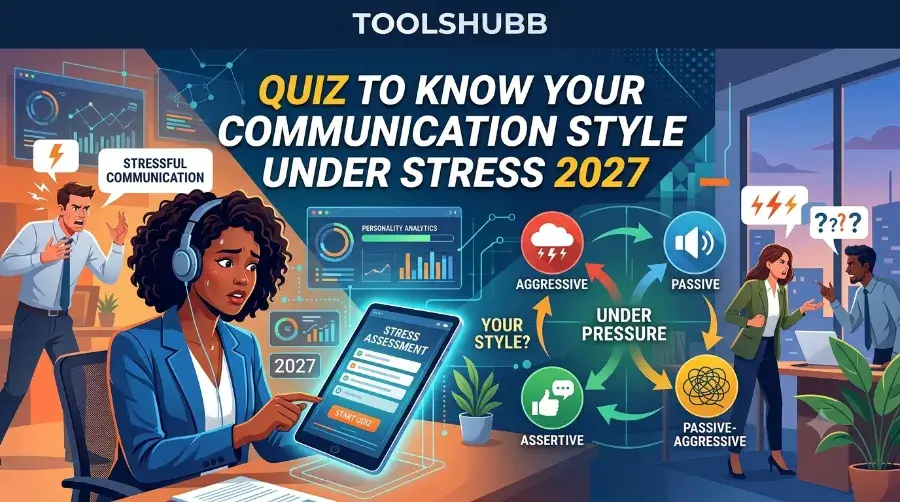
How to Use Your Result to Fix Fights Faster
Knowing your style is only step one. Real value comes from applying it in the middle of an actual disagreement, especially with a partner whose reactions differ from your own.
- Say your style out loud before the conversation starts, such as “I tend to go quiet when I am overwhelmed, so give me a minute.”
- Set a short pause rule, like 20 minutes, so withdrawal does not turn into hours of silence.
- Ask your partner to name their own style too, since matching two labeled patterns is far easier than guessing at two unlabeled ones.
- Revisit the disagreement once both nervous systems have calmed down, ideally within the same day.
- Track repeat topics for a month, because most recurring fights share a communication pattern rather than a new subject.
This works even better alongside other relationship insight tools. If your stress response tends to show up as needing alone time afterward, checking your social battery may help, since introversion and stress withdrawal frequently get confused for each other.
Fights over conflict style also often overlap with differences in daily rhythm. Couples who clash over planning ahead versus going with the flow may find answers in the planner versus spontaneous partner quiz, while those whose disagreements start over excitement versus routine might enjoy the adventure versus comfort quiz.
For a broader look at personality and relationship dynamics, the personality quizzes for couples guide on toolshubb.com pulls several of these tools together in one place.
Frequently Asked Questions
Is a stress communication style permanent?
No, it can shift with awareness and practice, though most people keep a strong default lean throughout their life unless they actively work on it.
Can two people with the same style have a healthy relationship?
Yes, though two Escalators may need extra tools to slow conversations down, while two Withdrawers may need reminders to actually revisit unresolved issues.
Does this quiz replace therapy?
No, it is meant as a starting point for self awareness rather than a clinical diagnosis or substitute for professional counseling.
Why do I act differently with my partner than with coworkers?
Emotional stakes are higher in romantic relationships, which often intensifies whichever stress style you already carry.
How long does it take to change a stress reaction?
Most people notice small shifts within a few weeks of consistent practice, though deeper patterns can take several months to soften.
Conclusion
Every couple argues, and every person reacts to pressure in their own particular way. A quiz to know your communication style under stress will not erase conflict from your relationship, but it will help you recognize the pattern the moment it starts. That recognition is often enough to stop a small disagreement from turning into a bigger one, and once you and your partner can name your styles out loud, the fight stops feeling personal and starts feeling like a puzzle you are solving together.
References
American Psychological Association, stress and communication research, 2025
Gottman Institute, conflict prediction research
Peer reviewed study on Gottman conflict style mismatch, PubMed
YouGov survey on relationship arguments, 2024
Iowa State University veterinary communication study, 2026
LeadershipIQ Communication Style Quiz
Verywell Mind Communication Style Quiz
Crucial Learning Style Under Stress Assessment