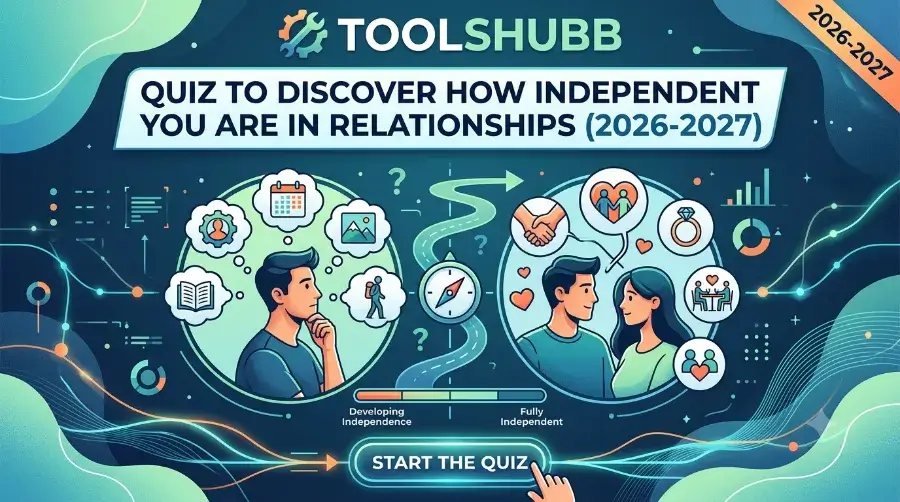

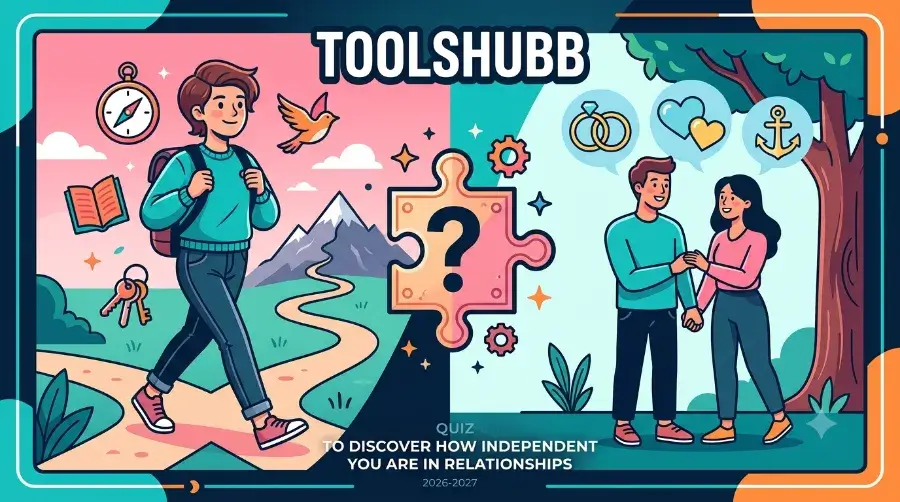
Do you feel calm when your partner spends the weekend with friends, or does your stomach twist the second they walk out the door? This quiz to discover how independent you are in relationships was built to answer exactly that question, and honestly, most people are surprised by what they find out. Some of us crave closeness so much that we quietly lose ourselves. Others guard their space so tightly that partners feel shut out. Neither pattern is a personal flaw. Both are learned habits that can be understood, measured, and gently reshaped once you know where you stand.
Understanding your relationship independence style is not about labeling yourself. Instead, it is about noticing patterns so you can build a partnership where both people feel secure and free at the same time. Below, you will find the science, real examples, a full self assessment, and a short quiz you can take right now.
Here is our detailed information about Quiz to Know More Romantic or Practical in Love read our latest blog
Key Takeaways
| What You Will Learn | Quick Summary |
|---|---|
| What relationship independence really means | It is the ability to keep your identity, hobbies, and opinions while staying emotionally connected |
| Why this matters for long term happiness | Couples with balanced independence report higher satisfaction and lower conflict over time |
| How to spot codependent patterns | Look for anxiety around separation, difficulty saying no, and losing your own opinions |
| How much space is normal | Space needs vary by attachment style, personality, and life stage, there is no single right number |
| What to do next | Take the quiz below, then use the results to talk openly with your partner |
What Does It Mean to Be Independent in a Relationship
Relationship independence describes how much of your own identity you keep while being part of a couple. Independent partners still have close friendships, personal goals, and private opinions after they commit to someone. They enjoy togetherness, but they do not need constant reassurance to feel secure. Meanwhile, they also know how to lean on their partner when life gets hard, because true independence is never the same thing as emotional distance.
This balance sits at the center of what therapists now call differentiation, a concept popularized by family systems research. A well differentiated person can stay calm and connected even when their partner disagrees with them. On the other hand, someone with low differentiation often feels swallowed by conflict or overwhelmed by closeness. Consequently, this quiz to discover how independent you are in relationships focuses heavily on differentiation, because it predicts long term happiness far better than chemistry or attraction alone.
If you want a deeper foundation before you continue, our complete beginner’s guide to personality quizzes for couples walks through the psychology behind every quiz on this site, including this one.
The Quiz to Discover How Independent You Are in Relationships
So why does a simple quiz matter here? Self report quizzes work because they force you to notice patterns you usually brush past in daily life. For example, you might not consciously realize that you check your partner’s phone location every hour until a question asks you directly. Similarly, you might not notice how often you cancel plans with friends just to be near your partner until you see the pattern written out.
Relationship coach Nedra Tawwab has built her entire practice around this idea, and her own relationship pattern quiz uses a similar approach to help people spot boundary issues before they become resentment. Likewise, the team at Empathi recently rounded up several science based relationship quizzes that use validated psychology scales rather than guesswork, which is exactly the standard we followed while building this one.
Codependent vs Independent Quiz: Spotting the Difference
A codependent vs independent quiz usually looks at three things: how you handle time apart, how you make decisions, and how you respond to conflict. These three areas reveal more about your relationship style than almost anything else. Below, you will find the clearest signs of each pattern.
Signs You Might Be Leaning Codependent
- You feel anxious or guilty when your partner wants alone time
- You struggle to name your own opinion until you know what your partner thinks
- You avoid disagreements even when something genuinely bothers you
- Your mood depends heavily on your partner’s mood throughout the day
- You have quietly dropped hobbies or friendships since the relationship started
Signs You Might Be Leaning Independent
- You can enjoy a weekend apart without checking in constantly
- You maintain friendships and interests that existed before the relationship
- You can disagree with your partner without panicking about the relationship ending
- You ask for help when you need it, but you do not require constant reassurance
- You feel like yourself whether you are single, dating, or married
Neither list is a diagnosis. Most people see a mix of both, and that mix shifts depending on stress, life stage, and how secure the relationship currently feels.
Curious to see where you stand? ToolsHubb gives you several free ways to check compatibility and get personalized insights. Start with the Love Compatibility Tool for a quick, instant score, or dig deeper with the Numerology Love Test based on your birth date. If you’re more drawn to astrology, the Zodiac Compatibility Calculator and the Chinese Zodiac Compatibility Tool both reveal how your signs align with a partner’s. For guidance tailored to your specific situation, try the Relationship Advice Generator, and if you’re getting back into the dating scene, the Dating Tips Generator can help you approach it with more confidence.
How Much Space Do I Need Quiz: Finding Your Number
A common question that comes up in the how much space do I need quiz category is whether wanting alone time means something is wrong. Generally speaking, it does not. Space needs are shaped by personality, upbringing, and attachment history, so they naturally differ from person to person.
| Attachment Pattern | Typical Space Preference | Common Challenge |
|---|---|---|
| Secure | Comfortable with both closeness and time apart | Rare, tends to communicate needs clearly |
| Anxious | Wants frequent reassurance, less comfortable with distance | Can misread space as rejection |
| Avoidant | Prefers more independence, sometimes withdraws under stress | Can misread closeness as pressure |
| Disorganized | Space needs swing unpredictably between extremes | Struggles to trust either closeness or distance |
Instead of aiming for one perfect number, healthy couples usually negotiate space the same way they negotiate anything else, through honest conversation. If you found this table useful, our quiz on communication style under stress pairs well with this one, since space conflicts almost always turn into communication conflicts eventually.
What the Research Says About Relationship Independence
The numbers behind this topic are more interesting than most people expect, and they explain why this issue shows up in nearly every long term relationship at some point.
Attachment Styles by the Numbers
Large scale surveys give a fairly consistent picture of how attachment styles break down across the adult population. National survey data suggests that roughly 56 percent of adults in the United States show a secure attachment style, while the remaining share splits between anxious and avoidant patterns. Research also shows a real cost to insecurity, since anxious attachment tends to correlate with breakup rates about two and a half times higher in long term studies, and avoidant partners often report roughly 35 percent lower intimacy in their relationships. WifiTalentsWifiTalents
A separate national poll adds useful context here as well. About 62 percent of Americans currently say they are in a romantic relationship, and people with anxious attachment are far more likely to report chronic loneliness, with roughly 40 percent saying they often feel like they lack companionship compared to only 12 percent of securely attached people. This gap matters because it shows that closeness alone does not guarantee emotional security, the quality of that closeness does. YouGov
Chart: Estimated Attachment Style Distribution Among US Adults
| Attachment Style | Estimated Share of Population |
|---|---|
| Secure | 56 to 59 percent |
| Avoidant | 22 to 25 percent |
| Anxious | 10 to 12 percent |
| Disorganized or Fearful | 5 to 9 percent |
Codependency Patterns Uncovered
Codependency research tells a similarly striking story. One recent industry analysis found that about 60 percent of people with codependent tendencies report real difficulty building independence from a partner or caregiver, 52 percent struggle to manage feelings of anger or resentment, and 45 percent say they feel emotionally drained after everyday interactions. Meanwhile, some clinicians go even further, estimating that as many as 90 percent of Americans display at least some signs of codependency, even if the pattern never becomes severe. ZipDoLifeStance Health
Chart: Common Codependency Signals (Self Reported)
| Signal | Share Reporting It |
|---|---|
| Difficulty building independence | 60 percent |
| Trouble managing anger or resentment | 52 percent |
| Feeling emotionally drained after interactions | 45 percent |
| Some signs of codependency overall | Up to 90 percent |
These numbers do not mean something is broken in most relationships. Rather, they show that independence and closeness sit on a spectrum that almost everyone moves along throughout life.
Real Life Examples of Independence in Action
Consider Sarah, a 32 year old nurse who noticed in January 2024 that she had not seen her college friends in over eight months since moving in with her partner. After talking it through, she started scheduling one solo evening every other week, and within three months, both she and her partner reported feeling closer, not further apart.
Another example comes from Daniel, a 29 year old software developer who realized during a 2023 couples workshop that he made almost every weekend decision based on his partner’s preferences alone. Once he began voicing his own choices even in small things like restaurant picks, his relationship satisfaction score on a standard self assessment rose from 6 out of 10 to 8 out of 10 within four months.
These stories repeat constantly in therapy offices and coaching sessions. Small, consistent changes in how much space a person claims tend to matter far more than dramatic gestures.

How to Build Healthy Independence Without Losing Connection
Building independence does not require distance for its own sake. Instead, it requires small, deliberate habits that protect your identity while keeping the relationship strong.
- Keep at least one hobby or friend group that exists entirely outside the relationship
- Practice saying your honest opinion before asking what your partner thinks
- Schedule regular solo time, even 30 minutes a day, without guilt
- Voice disagreements early instead of avoiding them until resentment builds
- Check in with yourself weekly by asking whether you still feel like yourself
Over time, these habits build what psychologists call secure functioning, a relationship style where both partners feel free and connected simultaneously. Furthermore, this pattern tends to protect couples during major life transitions like moving, career changes, or having children, since neither partner has fully lost their own identity along the way.
Relationship Independence Personality Test: Related Quizzes to Try
This relationship independence personality test works best alongside a few related assessments, since independence rarely shows up in isolation. If you tend to avoid conflict rather than address it directly, our quiz on apology style reveals how you typically repair things after a disagreement.
Similarly, if space feels like a bigger issue for you than for your partner, the social battery quiz explains how much alone time your personality naturally requires. For couples negotiating how fast to move a relationship forward, the relationship pace quiz adds useful context too.
Additionally, independence often shows up differently depending on whether someone prefers routine or spontaneity, which is exactly what our planner versus spontaneous partner quiz measures. If you are curious how independence connects to risk taking and adventure, the adventure versus comfort quiz rounds things out nicely. Finally, once you understand your own independence style, the ideal long term partner traits quiz helps you recognize what kind of partner complements it best. You can browse every available tool from our homepage as well.
If you prefer a more interactive format, the card based prompts at Two of Us work well as a follow up conversation starter once you and your partner both know your results.
Frequently Asked Questions
Is wanting a lot of alone time a sign of a bad relationship?
Not necessarily. Wanting personal space is normal and often reflects personality rather than relationship trouble, as long as both partners feel heard about their needs.
Can a codependent person become more independent?
Yes, absolutely. Independence is a skill that grows with practice, therapy, and honest communication, not a fixed trait someone either has or lacks.
How do I bring up space needs without hurting my partner’s feelings?
Frame the conversation around your own needs rather than their behavior. For instance, saying you need a quiet evening to recharge lands very differently than saying they are too clingy.
Does independence look the same in every relationship?
No. Independence needs shift based on personality, culture, life stage, and even stress levels, so comparing your relationship to someone else’s is rarely useful.
Is this quiz a substitute for therapy?
No, this quiz offers a starting point for self reflection, not a clinical diagnosis. If patterns feel overwhelming, a licensed therapist can offer personalized support.
Take the Quiz: 5 Quick Questions
1. Your partner announces a solo weekend trip with friends. Your first reaction is:
A. Genuine excitement for them, though you will miss them a little
B. A wave of anxiety about being apart for that long
C. Relief, since you already had plans of your own
Correct answer reflecting balanced independence: A
2. When making a big decision, you usually:
A. Wait to hear your partner’s opinion before forming your own
B. Form your own opinion first, then discuss it together
C. Decide alone and inform your partner afterward
Correct answer reflecting balanced independence: B
3. How often do you see friends without your partner present?
A. Rarely, it feels strange to go without them
B. Regularly, it feels normal and healthy
C. Almost never, since your schedules are always separate anyway
Correct answer reflecting balanced independence: B
4. During a disagreement, you tend to:
A. Avoid the topic to keep the peace
B. Say what bothers you, even if it feels uncomfortable
C. Shut down completely and withdraw
Correct answer reflecting balanced independence: B
5. If your partner needed a quiet night alone, you would:
A. Feel rejected or worried something is wrong
B. Respect it and use the time for yourself too
C. Feel confused since you rarely need that yourself
Correct answer reflecting balanced independence: B
If most of your answers matched the balanced choice, your independence style already supports a healthy long term relationship. If not, that simply means you have a clear starting point for growth, which is exactly what this quiz was designed to reveal.
Conclusion
Independence and closeness are not opposites, they are partners in the same relationship. This quiz to discover how independent you are in relationships exists to help you notice your own patterns clearly, without judgment, so you can build a partnership where both people feel free and secure at once. Whether your results leaned codependent, independent, or somewhere in between, the most useful next step is simply an honest conversation with your partner about what you both need. Small adjustments made consistently tend to matter far more than any single dramatic change, and that is genuinely good news for anyone starting this work today.
References
- Wifitalents attachment style research summary, 2026, https://wifitalents.com/attachment-style-statistics/
- YouGov survey on American attachment styles, 2023, https://today.yougov.com/society/articles/45827-what-do-americans-say-about-their-attachment-style
- ZipDo Education codependency statistics report, 2025, https://zipdo.co/codependency-statistics/
- LifeStance Health, signs of codependent relationships, 2025, https://lifestance.com/blog/how-to-tell-if-relationship-codependent/
- Nedra Tawwab, relationship pattern quiz, https://nedratawwab.substack.com/p/my-new-quiz-is-here-whats-your-relationship
- Empathi, science based relationship quizzes, https://empathi.com/blog/top-5-science-based-relationship-quizzes/
- Two of Us, relationship card quizzes, https://app.twoofuscards.com/quizzes