

Love is easy when life is easy. The real test comes when a diagnosis walks into the room and changes everything overnight. If you are searching for honest relationship advice couples dealing with a chronic illness actually need, you already know that pamphlets and generic tips rarely cover the exhaustion, the guilt, or the quiet fear that things might never feel normal again. This guide skips the fluff and gets into what genuinely helps two people stay connected when one partner is sick and both are tired.
Chronic illness does not just affect the body of the person diagnosed. It reshapes routines, finances, intimacy, and identity for both partners at once. Meanwhile, most couples never get a manual for this. So they figure it out through trial, error, and a lot of quiet nights wondering if they are doing it right. You are not failing. You are simply navigating something hard without a map, and that is exactly what this article is here to fix.
| Key Takeaway | What It Means for Your Relationship |
|---|---|
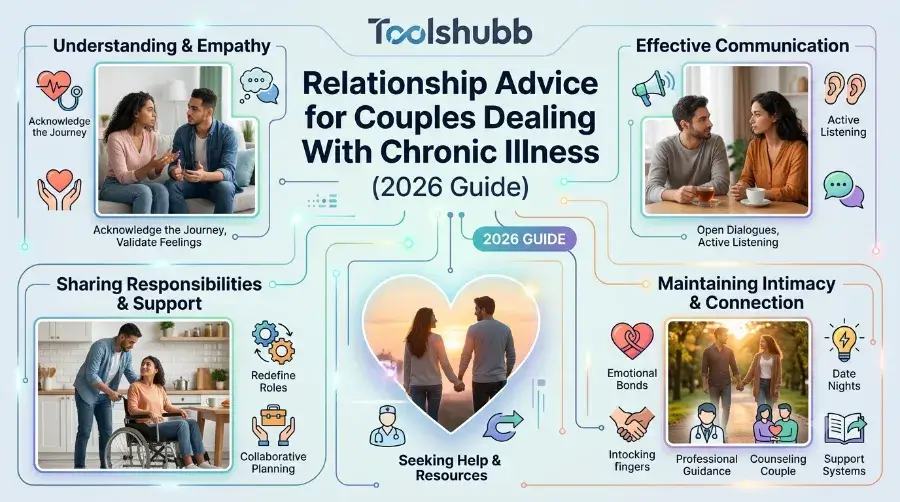
| Illness affects both partners, not just the patient | Emotional support should flow both ways, not just toward the sick partner |
| Communication style often needs to change | Old habits like guessing needs or avoiding hard talks stop working |
| Caregiver burnout is common and preventable | Regular breaks and outside support protect the relationship long term |
| Intimacy looks different, not gone | Physical closeness can be redefined instead of abandoned |
| Financial stress is a top relationship strain | Planning ahead reduces resentment and panic during flare ups |
| Professional support helps most couples | Therapy or support groups are not a sign of failure |
Why Chronic Illness Changes Every Relationship, Even Strong Ones
No couple plans for one partner to develop diabetes, lupus, multiple sclerosis, or a heart condition. Consequently, when it happens, the relationship has to absorb a shock nobody rehearsed for. Roles shift. The partner who used to handle the finances might now need help with basic tasks, and the healthy partner slowly becomes a part time nurse, scheduler, and emotional anchor.
According to recent public health data, roughly 76 percent of adults in the United States now live with at least one chronic condition, and over half manage two or more, based on figures reported by the Northern Arizona Medical Group. That means chronic illness relationship challenges are not rare or unusual. They are, in fact, closer to the norm than most couples realize, which is oddly comforting once you sit with it.
Still, knowing you are not alone does not make the day to day easier. That is why couples benefit from treating this as a shared project rather than one person’s burden. Teams navigating career ambition differences already know that major life pressure tests communication style, and illness applies that same pressure at a much higher volume.
The Emotional Whiplash Nobody Warns You About
Grief shows up even when nobody has died. Couples often grieve the relationship they used to have, the spontaneity, the shared hobbies, or the version of their partner who did not need daily medication. This grief is valid and deserves space instead of silence.
The Real Numbers Behind Chronic Illness and Relationships
Data helps normalize what many couples feel but rarely say out loud. Below is a snapshot of the most recent findings on chronic illness and relationship strain, gathered from health research organizations.
| Statistic | Source and Year |
|---|---|
| Divorce estimates reach as high as 75 to 80 percent in marriages where one spouse develops a serious chronic illness | AARP, 2017, and Global Genes, 2022 |
| Nearly 60 percent of U.S. adults live with at least one major chronic condition as of 2023 data | American Action Forum, 2025 |
| Women report higher rates of chronic pain than men, at 25.4 percent versus 23.2 percent | CDC, 2025 |
| Caregiver burden is strongly linked to emotional and physical strain in spousal caregivers | Aging and Mental Health journal, 2025 |
| Partners often carry a larger share of caregiving duties than other family caregivers | PMC clinical review |
These numbers are sobering, yet they are not a prediction of doom for your relationship. Instead, they highlight why proactive relationship advice couples dealing with illness need should focus on prevention rather than crisis response. Couples who address roles, rest, and resentment early tend to fare far better than those who wait until burnout sets in.
Supporting a Sick Partner Tips That Actually Work
Good intentions are not enough on their own. Supporting a sick partner tips work best when they are specific, sustainable, and adjusted regularly as needs change. Below are approaches that couples and counselors consistently recommend.
- Ask instead of assuming. A simple question like “do you want comfort or solutions right now” prevents a lot of unnecessary friction.
- Learn the illness together. Reading about the condition as a team, rather than leaving the sick partner to explain everything alone, builds shared understanding.
- Protect small rituals. A weekly coffee, a shared show, or a nightly check in keeps the relationship feeling like a partnership rather than a patient and caregiver arrangement.
- Track energy, not just symptoms. Many chronic conditions come with unpredictable energy levels, so flexible planning beats rigid schedules.
- Say thank you often. Gratitude for small efforts, on both sides, keeps resentment from quietly building.
Furthermore, according to the Global Myeloma Action Network, being a good partner during illness often comes down to patience, honest communication, and a willingness to adapt rather than trying to fix everything. That perspective matters because many healthy partners feel pressure to solve problems that simply cannot be solved, only managed together.
When Support Turns Into Overload
There is a fine line between helping and disappearing into a caregiver role. Partners who lose themselves entirely in caregiving often burn out within a year or two, according to caregiver strain research published in Aging and Mental Health in 2025. If you recognize signs of exhaustion creeping in, the guidance in this burnout prevention resource offers a practical starting point for rebalancing before things spiral.
Dating With a Chronic Illness Advice for New Couples
Starting a relationship while managing a chronic condition brings its own set of nerves. When should you tell someone? Will they stay once things get hard? Dating with a chronic illness advice tends to center on timing, honesty, and self respect rather than hiding the truth to seem more appealing.
- Disclose on your own timeline. There is no universal right moment, though most people find that being upfront by the third or fourth date builds trust without oversharing too soon.
- Watch how they react, not just what they say. A partner who asks thoughtful questions is showing you something valuable about their character.
- Set expectations early. If flare ups mean canceled plans sometimes, saying so upfront prevents future misunderstandings.
- Do not apologize for your body. Chronic illness is not a personality flaw, and it never needs a lengthy apology attached to it.
Meanwhile, new couples often worry that illness makes them less desirable. In reality, plenty of long term relationships thrive specifically because both partners entered with clear communication from day one. Setting that tone early tends to prevent the exact chronic illness relationship challenges that blindside couples who avoid the topic altogether.
Chronic Illness Relationship Challenges Couples Face Most Often
Every couple’s experience looks different, yet certain chronic illness relationship challenges show up again and again in counseling rooms and support groups.
- Shifting household roles. Chores, finances, and parenting duties often need to be redistributed, sometimes permanently.
- Intimacy changes. Fatigue, pain, or medication side effects can lower desire, which requires honest conversation rather than silent frustration.
- Financial strain. Medical bills, reduced income, and insurance battles add pressure that can spill into daily arguments. Couples working through this kind of tension often find structured guidance, like this approach to financial disagreements, genuinely useful for keeping money talks calm.
- Identity loss. The sick partner may grieve who they used to be, while the healthy partner grieves the future they had imagined.
- Isolation. Friends sometimes drift away when illness enters the picture, leaving couples relying heavily on each other.
Because these challenges overlap so often, addressing one usually eases pressure on the others. For example, tackling financial planning early reduces the stress that often triggers arguments about intimacy or role changes later.
How to Talk About It Without Fighting
Communication under stress tends to break down fast. Couples dealing with chronic illness benefit from structured, low pressure conversations rather than emotionally loaded ambushes during a hard day.
Use Scheduled Check Ins
Setting aside fifteen minutes weekly, away from the middle of a flare up, gives both partners space to raise concerns calmly. This small habit prevents the buildup of resentment that often causes explosive arguments later.
Avoid the Blame Trap
Illness is nobody’s fault, yet stressed couples sometimes speak as though it is. Swapping “you always cancel on me” for “flare ups are hard for both of us” shifts the tone from accusation to teamwork.
If one partner tends to shut down entirely rather than engage, the strategies in this guide on handling a partner who avoids difficult conversations can help reopen dialogue without forcing a confrontation.
When Burnout Creeps In
Caregiver burnout is one of the biggest threats to relationships affected by chronic illness. Signs include constant irritability, emotional numbness, resentment, and a growing sense of dread around caregiving duties.
According to insight shared by Align Career Consulting, maintaining personal identity and outside interests, even in small ways, helps caregiving partners avoid losing themselves entirely in the relationship. That balance protects both people, since a burned out caregiver eventually has less to give anyway.
Practical burnout prevention includes:
- Scheduling respite time, even just a few hours weekly, without guilt
- Joining a caregiver support group, either local or online
- Accepting help from family or paid support rather than insisting on doing everything alone
- Revisiting personal hobbies that existed before caregiving began
Real Couples, Real Stories
Numbers only tell part of the story. In one widely shared account published through the Spondylitis Association of America in 2023, a couple managing ankylosing spondylitis described how shifting from a “fix it” mindset to a “manage it together” mindset transformed their marriage after nearly a decade of frustration. Their turning point came not from a new treatment, but from finally naming the emotional toll out loud to each other.
Similarly, many readers on toolshubb.com’s relationship community share that the biggest shift happens once both partners stop pretending everything is fine. One reader, managing rheumatoid arthritis since 2019, noted that couples counseling starting in early 2024 helped her and her husband rebuild intimacy after two years of near silence about her pain levels. Stories like these repeat a common theme, honesty paired with professional support tends to outperform sheer willpower alone.
A Quick Look at Where Couples Struggle Most
The chart below summarizes commonly reported strain areas among couples managing chronic illness, based on caregiver burden research and patient advocacy surveys referenced throughout this article. Feel free to copy this into your own notes or a spreadsheet.
Relationship Strain Areas Reported by Couples (Approximate Share)

Financial Pressure        ████████████████████  70%
Emotional Exhaustion       ██████████████████    65%
Intimacy Changes           ███████████████       55%
Household Role Shifts      █████████████         50%
Social Isolation           ███████████            40%
This simple breakdown shows that money and emotional fatigue tend to outrank even physical caregiving tasks as the top sources of tension. Knowing where the pressure concentrates allows couples to focus their energy where it counts most, rather than spreading thin trying to fix everything at once.
FAQ
Does chronic illness always end in divorce?
No. While some studies report divorce estimates as high as 75 to 80 percent in couples facing serious illness, many relationships not only survive but grow stronger through the experience, especially with early communication and outside support.
How do we keep intimacy alive when energy is low?
Redefine intimacy to include non physical closeness, such as extended conversation, shared humor, or gentle touch, alongside physical intimacy when energy allows.
Should the healthy partner also see a therapist?
Yes. Individual therapy or a caregiver support group helps the healthy partner process grief and stress that often goes unspoken.
What if my partner refuses to talk about their diagnosis?
Patience helps, though gentle, repeated invitations to talk, rather than pressure, tend to work better than forcing the conversation.
Is it normal to feel resentment sometimes?
Yes, and it does not mean you love your partner less. Naming the feeling privately or in therapy prevents it from turning into silent bitterness.
Quick Relationship Quiz: How Are You Really Coping?
Answer honestly for the most useful result.
1. When your partner has a flare up, you usually:
A) Feel overwhelmed and unsure what to do
B) Step in calmly with a plan you both agreed on
C) Avoid the topic until it passes
2. How often do you and your partner talk about your feelings around the illness?
A) Rarely, we avoid it
B) Occasionally, when things get bad
C) Regularly, we check in on purpose
3. When you need a break from caregiving, you:
A) Feel guilty and push through anyway
B) Ask for help sometimes, though not consistently
C) Schedule regular breaks without guilt
4. Financial stress from medical costs feels:
A) Overwhelming and rarely discussed
B) Stressful, but we talk about it sometimes
C) Manageable because we planned ahead together
5. Your intimacy as a couple right now feels:
A) Distant and complicated
B) Inconsistent, better some weeks than others
C) Redefined but still strong
Answer Key: Mostly A answers suggest burnout risk and a need for outside support. Mostly B answers show a couple that is coping but could benefit from more structure. Mostly C answers reflect a strong, adaptable partnership already using healthy strategies.
Conclusion
Chronic illness will always test a relationship, though it does not have to break it. Couples who communicate openly, share the emotional and practical load, and reach out for outside support when needed tend to come through stronger rather than simply surviving. If you and your partner are navigating this right now, know that the exhaustion you feel is real, valid, and shared by millions of couples walking the same road. Start small, whether that means a weekly check in, a shared read through your diagnosis, or simply sitting down together at toolshubb.com to explore more relationship tools built for exactly this kind of season. The goal was never to be perfect at this. It was always just to stay close.
References
- American Action Forum. Primer: Chronic Disease Among Adults in the United States. 2025.
- Northern Arizona Medical Group. Chronic Conditions in 2025: Facts and Statistics. 2025.
- Centers for Disease Control and Prevention. QuickStats on Chronic Pain Among Adults. 2025.
- AARP. What Happens When Spousal Caregivers Fall Out of Love. 2017.
- Global Genes. The Spousal Caregiver: How Illness Challenges a Marriage. 2022.
- Aging and Mental Health Journal. Association Between Chronic Illnesses in Older Adults and Caregiver Burden. 2025.
- Global Myeloma Action Network. What Makes a Good Partner to Someone With a Chronic Illness.
- Align Career Consulting. Maintaining Identity While Caregiving.
- Spondylitis Association of America. Thriving as a Couple While Living With Chronic Pain. 2023.