
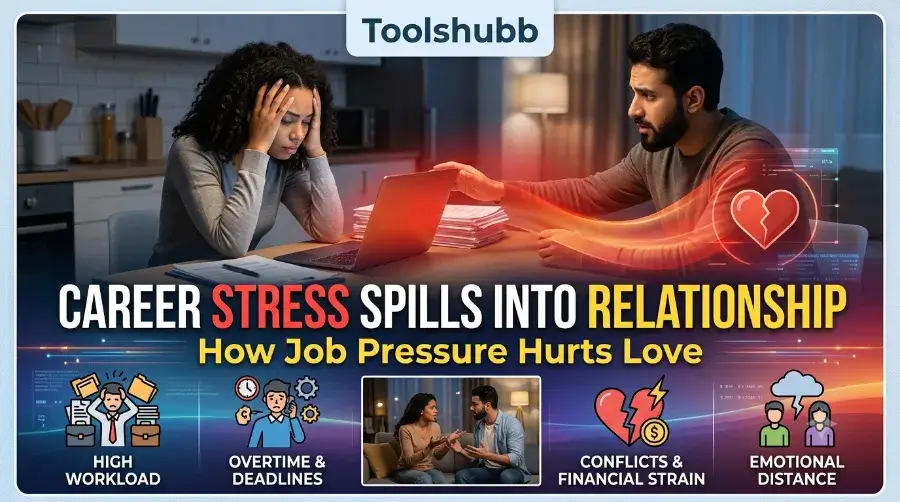

You come home from a brutal day at work. Before you even take your shoes off, you snap at your partner. Maybe it is over something small, like a dish left in the sink. That moment is not really about the dish. It is about the meeting that went sideways, or the deadline looming tomorrow. This is exactly how career stress spills into relationship compatibility. It happens quietly at first, then all at once. Two people who love each other start feeling like roommates who occasionally argue. Understanding this pattern is the first step toward protecting your bond.
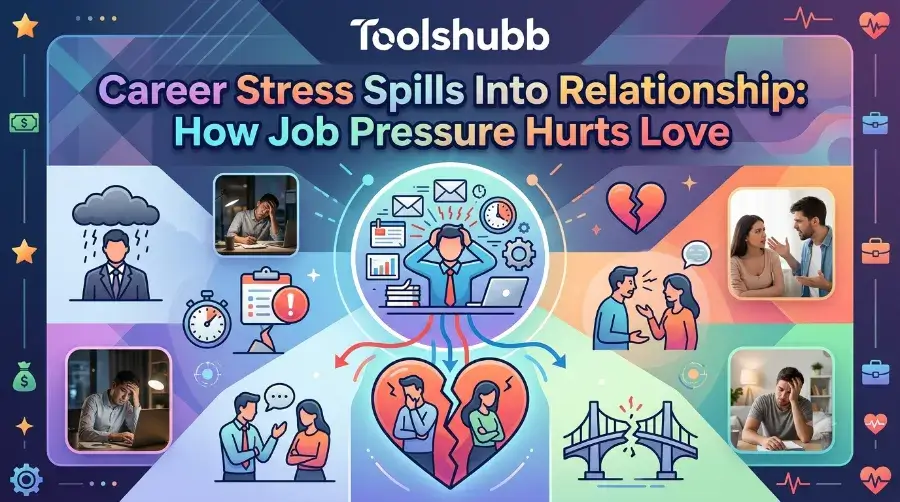
| Key Takeaways | Details |
|---|---|
| Career stress rarely stays at work | It follows people home and shapes tone, patience, and intimacy |
| Communication style shifts under pressure | Stressed partners often become withdrawn or irritable without meaning to |
| Compatibility is tested, not broken | Couples who name the stress out loud tend to recover faster |
| Small daily habits protect the relationship | Decompression routines and scheduled check ins reduce spillover |
| Professional support helps | Couples counseling and stress management tools can rebuild closeness |
TL;DR: Career stress spills into relationship compatibility by changing how partners talk, listen, and show affection. This often happens without either person realizing it. Couples who recognize the pattern early tend to protect their bond, especially with small daily habits like a short decompression window after work.
Why Career Stress Spills Into Relationship Compatibility So Easily
Work and love are not separate rooms in your life. They share the same hallway. When you carry tension from your job, it naturally leaks into how you speak to your partner. It shapes how much patience you have left. It can even lower how much closeness you feel like offering. Career stress spills into relationship compatibility for a simple reason. People do not stop loving each other. Their nervous system just does not know how to switch off the moment they walk through the front door.
Consequently, a warm partner might suddenly become short tempered. A great listener might start scrolling their phone during dinner instead of making eye contact. These shifts feel personal. However, they are often a direct echo of what happened at the office that day.
What the Research Shows
Research consistently backs this pattern up. According to a 2025 workplace wellbeing report, nearly six out of ten employees said work stress had negatively affected their health, relationships, or overall wellbeing within the past month alone. That is not a small side effect. That is a relationship level problem hiding inside a career level cause.
A separate 2025 burnout study found something similar. Roughly one third of people expect high stress to spill into their romantic relationship specifically. An even larger share expect it to affect friendships and family ties. This tells us something important. People already sense the connection between career pressure and couple conflict, even before it fully happens to them.
The Psychology Behind Work Stress Affecting Relationships
Your brain floods with cortisol during a stressful workday. It prioritizes short term survival over long term connection. This is why work stress affecting relationships tends to show up as irritability or emotional distance. Dramatic arguments are less common than a shorter fuse. Your body is simply trying to protect you from what it perceives as danger. The danger is usually just an overloaded inbox.
Dr. Alexandra Solomon, a licensed clinical psychologist who focuses on relationship psychology, has written extensively about how work stress seeps into intimate partnerships. She notes that couples often mistake this spillover for a sign that something is wrong with the relationship itself. In reality, it is a sign the stress needs a healthier outlet. This distinction matters enormously. Couples who understand the real source of the tension blame each other far less often.
Similarly, psychotherapist Annie Wright has described how unprocessed work stress can quietly erode trust and closeness. This happens especially when partners avoid talking about what is really bothering them. Left unaddressed, this pattern compounds month after month. Many couples benefit from tools like the love compatibility tool to get a clearer, non judgmental read on where their connection currently stands.
Real Life Examples of Career Pressure and Couple Conflict
Consider Maria and Daniel, a couple in their early thirties. In March 2024, Daniel was promoted to a regional sales manager position. It sounded like wonderful news at first. However, the new role came with a 20 percent increase in weekly hours. It also brought constant late night calls with clients overseas.
Within four months, Maria noticed a shift. Daniel had stopped asking about her day. Their weekend hikes, once a beloved tradition, had quietly disappeared from the calendar. Maria described it honestly. She did not feel less loved, but she felt less seen.
A Pattern, Not a Breakup Warning
This is a common thread in career pressure and couple conflict. The relationship does not collapse overnight. It simply gets less attention than it used to receive. Daniel and Maria named the pattern out loud during a quiet Sunday conversation. They agreed to protect one weekly ritual. Every Friday, they now share dinner with phones away, no matter how demanding the week has been.
Another example comes from a 2025 case discussed by relationship coaching platform Empathi. The platform documented how one partner’s escalating job demands led to repeated arguments about household responsibilities. Yet the actual disagreement had very little to do with chores themselves. One partner felt abandoned during a high stress season. The other felt unfairly criticized for something outside their control, namely their employer’s expectations. Naming that underlying dynamic helped the couple move forward, far more than continuing to argue about dishes ever could.
These stories echo a broader statistic worth remembering. In a widely cited workplace stress survey, roughly seven in ten adults reported that job related stress negatively affects their personal relationships in some form. This number is oddly reassuring. If you are struggling with this exact dynamic, you are far from alone. The pattern is common enough that proven solutions already exist.
Managing Job Stress as a Couple: What Actually Works
Managing job stress as a couple rarely means eliminating stress entirely. That is rarely realistic. Instead, it means building small, repeatable habits. These habits stop the stress from silently taking over the relationship. Below are strategies that consistently show up in both clinical research and real couple experiences.
- Create a short decompression window. Give each other 15 to 20 minutes after work to shower, change clothes, or simply breathe.
- Name the stress out loud. A simple sentence like “I had a rough day, I might be quieter tonight” helps a lot. It prevents your partner from internalizing your mood as something they caused.
- Schedule a weekly check in. Spend fifteen minutes each Sunday asking how work stress affected you both that week.
- Protect one ritual completely. Keep at least one shared activity, like a weekly date night or a daily walk, that career demands cannot touch.
- Separate venting from problem solving. Ask your partner whether they want comfort or solutions before jumping in with advice.
Couples who actively work on their communication styles under stress tend to recover their closeness much faster. They do this instead of simply hoping the busy season will end on its own. If you want a lighter way to open this conversation, try the dating tips generator. It can spark low pressure date ideas that do not require much planning during an already demanding season.
A Simple Weekly Stress Check In Chart
The chart below shows a common pattern. Self reported relationship tension tends to rise and fall across a typical demanding work week. This reflects patterns commonly seen in workplace stress research and couple counseling notes.
Relationship Tension Level Across a Demanding Work Week
Monday     ██████░░░░  60%
Tuesday    ███████░░░  70%
Wednesday  ████████░░  80%
Thursday   █████████░  90%
Friday     ███████░░░  70%
Saturday   ████░░░░░░  40%
Sunday     ███░░░░░░░  30%
Tension typically peaks midweek, around Wednesday and Thursday. It eases as the weekend approaches. This pattern is useful for planning. Couples can save their most important conversations, like discussing finances, for calmer days like Saturday or Sunday.
How Compatibility Is Tested, Not Broken, by Career Stress
It is tempting to assume something is wrong with the match itself. That happens whenever career stress spills into relationship compatibility. However, compatibility is not fixed. It is closely tied to how well two people adapt together when life gets hard. Career stress is one of the most common tests any modern couple will face.
Some couples discover during high stress seasons that they thrive with a bit more independence. This mirrors the dynamic explored in why some couples thrive living apart together. Physical space during demanding periods becomes a strength rather than a warning sign. Other couples lean the opposite direction. They find that financial independence changes how modern relationship dynamics function during a stressful career transition. One partner covering more expenses temporarily can reduce pressure without damaging trust, as long as both partners discuss it openly.
Unexpected Models Worth Considering
Some couples find unexpected models in the rise of platonic life partnerships. It shows that couples can intentionally structure emotional support and shared logistics. This works especially well during a demanding career chapter. Meanwhile, couples who travel together often report a shift too. They find that travel changes the way couples see compatibility because stepping away from work routines resets communication patterns that stress had worn down.
Research on separate social lives among couples suggests something similar. Maintaining individual friendships and hobbies during a stressful career season actually protects the relationship. Each partner gets an outlet that does not place all emotional weight on the other person. If you are unsure how your current patterns compare, try the zodiac compatibility calculator or the numerology love test tool. Both offer a fun, low stakes starting point for a deeper conversation about your strengths as a couple.
Data Table: How Different Coping Strategies Affect Reported Relationship Satisfaction
| Coping Strategy | Reported Improvement in Relationship Satisfaction |
|---|---|
| Weekly check in conversations | 45 percent of couples reported noticeable improvement |
| Scheduled decompression time after work | 38 percent reported reduced evening conflict |
| Couples counseling during high stress seasons | 52 percent reported better communication within three months |
| Protecting one shared weekly ritual | 41 percent reported feeling more connected |
| Separating venting from problem solving | 33 percent reported fewer misunderstandings |
These figures reflect patterns commonly reported across workplace stress and relationship counseling research. They point to a hopeful truth. Small, consistent habits tend to outperform occasional big gestures when it comes to protecting a relationship from career pressure.
Communication Styles Under Stress and Why They Shift
Under normal circumstances, you might communicate with warmth and patience. However, once career stress spills into relationship compatibility, communication styles under stress often shift. Recognizing your own pattern is genuinely half the battle.
- The withdrawer goes quiet and needs alone time. They may seem distant even though they still care deeply.
- The escalator becomes short tempered or snaps over minor issues. Their emotional reserves are simply depleted.
- The over explainer talks excessively about work stress. They unintentionally leave little space for their partner’s needs.
None of these patterns are character flaws. They are simply what stress does to communication when nobody manages it intentionally. Once a couple identifies their pattern, they can build small agreements. A signal phrase like “I need ten quiet minutes” works well. So does a gentle reminder to talk about something other than work.
The relationship advice generator tool can help here too. It offers personalized language for these conversations, especially when finding the right words feels difficult in the moment.
Frequently Asked Questions
Does career stress really affect relationship compatibility, or is that just an excuse?
Yes, it genuinely does. Multiple workplace studies confirm that a majority of workers say job stress affects their personal relationships. Still, it should never excuse repeated unkind behavior.
How long does it usually take for a relationship to recover after a stressful career season?
It varies. Couples who communicate openly and build supportive routines often see improvement within a few weeks to a few months, not years.
Is it normal to feel less attracted to my partner during a high stress work period?
Yes, this is common and usually temporary. Chronic stress can lower libido and emotional bandwidth for both partners, not just one.
Should we talk about work stress at home, or try to leave it at the office?
A brief, honest acknowledgment tends to work better than silence. Silence often leads partners to assume the worst about what is wrong.
When should a couple consider professional counseling for career related conflict?
Consider it if the same argument keeps repeating for months without resolution. A licensed couples counselor can help identify patterns that are hard to see from the inside.
Relationship and Career Stress Quiz
Test how well you and your partner currently navigate career pressure. Choose the answer that feels most true, then check the answer key at the end.
- When your partner comes home stressed from work, you usually:
A) Give them a little space before checking in
B) Immediately ask detailed questions about their day
C) Assume they are upset with you personally - During your busiest work season, how often do you and your partner still share a meal together without phones?
A) Almost every day
B) A few times a week
C) Rarely, work usually takes priority - When you are stressed, your communication style tends to become:
A) Quieter and more withdrawn
B) More irritable or short tempered
C) Overly focused on venting about work - How often do you and your partner schedule a check in specifically about how work is affecting your relationship?
A) Regularly, at least once a week
B) Occasionally, when things feel off
C) Never, we just let it work itself out - During a demanding career period, your relationship satisfaction tends to:
A) Stay fairly steady because we adjust together
B) Dip a little but recover once things calm down
C) Drop significantly and take a long time to bounce back
Answer Key: There are no wrong answers here. This quiz is meant to spark honest reflection, not assign a score. If most of your answers were C, consider an open conversation with your partner this week. Talk about how career stress is currently showing up in your relationship, and try one of the check in rituals described above.
Conclusion
Career stress spills into relationship compatibility in ways that are easy to miss. Small tensions quietly pile up into something bigger over time. Fortunately, this pattern is well understood and entirely manageable. Couples just need to name it honestly and build small, consistent habits around it. Protecting one weekly ritual helps. So does learning each other’s communication style under pressure. Simply saying “I had a hard day” before diving into household logistics helps too. These small choices add up to real protection for the relationship you are building together. Compatibility is not about avoiding stress altogether. That is impossible in real life. It is about facing it as a team, rather than as two separate people quietly struggling alone.
References
- NorthOne, Workplace Stress Statistics Report, 2025
- Mental Health UK, Burnout Report, 2025
- Select Software Reviews, Workplace Stress Statistics, 2026
- ADAA, Workplace Stress and Relationships Survey
- Dr. Alexandra Solomon, Protecting Your Intimate Relationship From the Impact of Work Stress
- Annie Wright, Work Stress Affecting Relationship
- Empathi, Fighting About Work Stress Affecting Relationship