
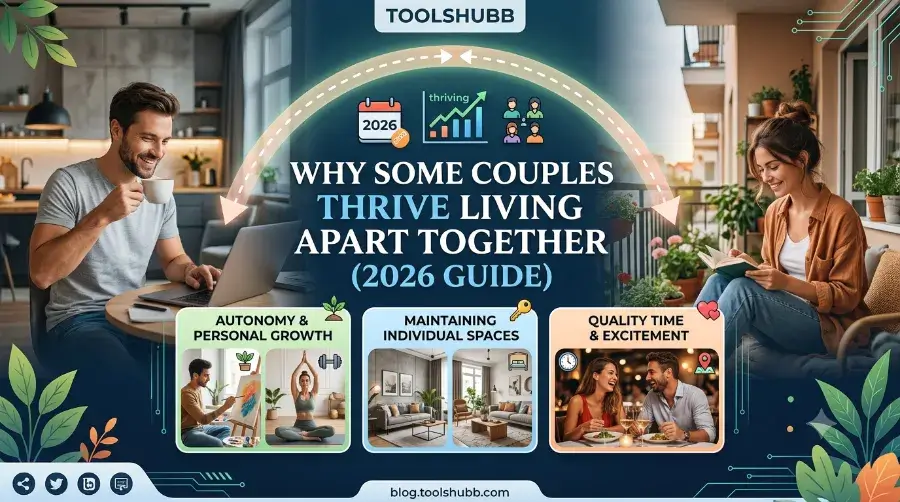

Picture this. Sarah and Marcus have been together for six years. They talk every single day, they spend four nights a week together, and they are more in love now than they were in year one. Yet they still keep two separate addresses, two separate leases, and two separate junk drawers. To their friends, it looks strange. To Sarah and Marcus, it is the reason their relationship works at all.
TL;DR: Some couples thrive living apart together because separate homes protect their independence, reduce daily friction, and keep romance intentional instead of routine. Research from 2025 and 2026 shows millions of couples now choose this setup on purpose, not because their relationship is failing. For the right personalities, distance builds trust instead of breaking it.
This is not a fluke. Across the United States and Europe, some couples thrive living apart together, and the number keeps climbing every year. According to Census Bureau data released in early 2026, roughly 4.2 million married couples in the U.S.
now live separately, marking a 12 percent jump from the start of 2025. That is not a small trend anymore. It is a genuine shift in how modern partners define commitment, and if you want to understand how couples today build that definition for themselves, our guide on how modern couples define commitment breaks down the bigger picture. DoULike
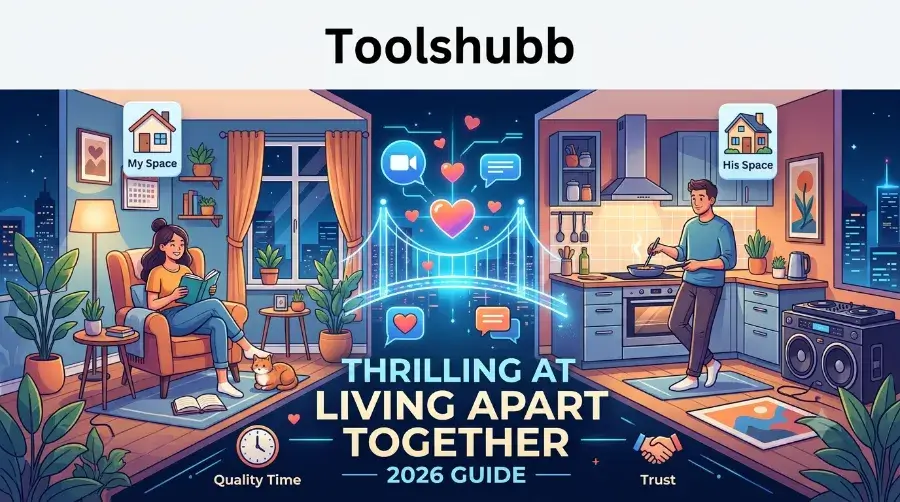
So why does this arrangement work so well for some pairs while it would quietly sink others? That question sits at the center of everything below.
Key Takeaways
| Key Point | What It Means For Your Relationship |
|---|---|
| LAT is growing fast | Millions of couples now choose separate homes on purpose, not by accident |
| Independence fuels intimacy | Personal space often makes couples value their time together more |
| Communication becomes intentional | Distance forces couples to talk with purpose instead of drifting into silence |
| It is not for everyone | Anxious attachment styles or trust issues can make LAT harder, not easier |
| Structure matters | Successful LAT couples build routines, not just good intentions |
What Living Apart Together Actually Means
Living apart together relationships are exactly what the name suggests. Two people commit fully to each other while keeping separate homes, separate bills, and often separate cities. This is different from dating casually or being long distance by circumstance. These are established couples who choose distance on purpose.
Meanwhile, the label covers a wide range of situations. Some LAT couples live five minutes apart and see each other daily. Others live in different states or countries and meet up every few weeks. Either way, the defining feature is choice. Nobody is forcing the arrangement. Both partners have decided that two roofs work better than one. Why Open Communication About Exes Matters in New Relationships
Interestingly, this is not just a modern dating fad either. Family researchers have tracked LAT arrangements among married couples for over a decade, and the pattern has held steady rather than fading out. In fact, one 2025 family profile from Bowling Green State University found that newlyweds with less education were far more likely to be in an LAT relationship, at nearly 23 percent, compared to just 9 percent among newlyweds with a bachelor’s degree or higher. Clearly, this lifestyle cuts across many different backgrounds and reasons. Bowling Green State University
The Numbers Behind Couples Who Choose Separate Homes
Numbers tell a clearer story than opinions ever could. Below is a snapshot of the most recent data on couples who choose separate homes, pulled from government and academic sources through 2026. you can read The Impact of Shared Humor on Long Term Relationship Success.
| Statistic | Figure | Source |
|---|---|---|
| U.S. married couples living apart (April 2026) | 4.2 million | U.S. Census Bureau |
| Increase from early 2025 | 12 percent | Census Bureau, 2026 |
| Americans living apart from a spouse (2022 estimate) | 3.89 million, about 2.95 percent of married Americans | The New York Times |
| Newlyweds in LAT relationships with less than high school education | 23.4 percent | BGSU National Center for Family and Marriage Research |
| Newlyweds in LAT relationships with a bachelor’s degree | 9.0 percent | BGSU National Center for Family and Marriage Research |
| Growth in married couples living apart, 2000 to 2022 | Over 40 percent | NPR, 1A reporting |
Between 2000 and 2022, the share of married couples choosing to live apart rose by more than 40 percent, with older women driving much of that shift. That detail matters because it shows this is not only a young, dating-app driven trend. Long-married couples are choosing it too, often later in life, once they already know exactly who they are. you can also read our lattest blog on How Travel Changes the Way Couples See Compatibility (2026 Guide)
Why Some Couples Thrive Living This Way
Here is where things get personal. Not every couple would enjoy this setup, yet for the right pair, some couples thrive living apart together in ways that surprise even their closest friends. Three patterns show up again and again in relationship research and in real client conversations. Why Some Relationships Work Better With Separate Social Lives
More Independence, Less Resentment
When two people share every square foot of a home, small habits become daily arguments. Dishes left in the sink, the thermostat war, whose turn it is to take out the trash. Separate homes remove most of that friction entirely. How Pets Affect Relationship Compatibility and Bonding (2026 Guide)
Consequently, couples in LAT arrangements often report fewer petty conflicts and more energy for the conversations that actually matter. A 2025 profile from the National Center for Family and Marriage Research noted the LAT share among newlyweds has stayed steady over the last five years, suggesting the model is not a passing phase but a stable choice for a meaningful slice of couples.
Better Communication Habits
Distance removes the option to just exist in the same room without talking. Instead, couples have to check in on purpose. They call. They text updates. They plan actual conversations instead of assuming closeness will happen automatically. Career Stress Spills Into Relationship: How Job Pressure Hurts Love
Furthermore, this habit tends to carry over into how they handle conflict. Long-distance research published in the Journal of Communication found that couples separated by distance reported relationship quality, intimacy, trust, and satisfaction that matched or slightly exceeded couples living in the same city. That finding challenges the old assumption that distance always weakens a bond. Connectedcouples
Stronger Sense of Self
Living apart gives each partner room to keep their own friendships, hobbies, and daily rhythms intact. As a result, they show up to the relationship as full individuals rather than merged halves of one household. Many therapists describe this as one of the biggest reasons some couples thrive living apart together well into their fifties and sixties, long after the kids have left home.
The Real Benefits of Not Cohabiting
The benefits of not cohabiting go beyond avoiding chore disputes. Based on years of working with couples navigating unconventional setups, a few advantages stand out clearly.
- Protected personal time. Each partner keeps hobbies, friendships, and quiet evenings without negotiating around a shared calendar.
- Reduced financial entanglement. Separate homes often mean separate finances, which can lower stress for couples who value independence with money.
- Intentional quality time. Because time together is planned rather than assumed, date nights and weekends tend to feel more special.
- Space for personal growth. Career moves, further education, or personal projects do not require constant compromise with a live-in partner.
- Lower burnout risk. Distance naturally limits the daily wear and tear that leads to what many counselors now call relationship fatigue.
Additionally, couples who choose separate homes often report that arguments resolve faster. Since they are not stuck in the same space after a disagreement, both partners get a natural cooling off period before the next conversation.
Real Couples Stories:
Numbers matter, but stories make the pattern real. Take the case of Elena and Marco, a couple in their late thirties who have lived in separate apartments across the same city since 2021. Marco travels frequently for work, and early on they realized that trying to maintain one shared home while he was gone half the month created more stress than comfort. Five years later, they still keep two homes and describe their relationship as the healthiest either has ever had.
a widely cited example comes from an essay published on Substack in 2024, where the author described her father and his partner of 50 years, who kept separate homes for the entire relationship. According to the piece, the couple has stayed together and happy for the full five decades without ever sharing one address. That kind of longevity is hard to argue with. Substack
Meanwhile, a 2025 NPR segment highlighted a UK household study showing that older couples who chose to live in separate homes reported better mental health outcomes than those who cohabited full time. For couples entering a second marriage or blending families later in life, this arrangement often removes pressure that neither partner wants to repeat. NPR
These stories line up with what shows on our relationship compatibility quiz, where users who score high on independence traits consistently report more satisfaction in non traditional living setups compared to those who score high on merged identity traits.
where you stand? ToolsHubb gives you several free ways to check compatibility and get personalized insights. Start with the Love Compatibility Tool for a quick, instant score, or dig deeper with the Numerology Love Test based on your birth date. If you’re more drawn to astrology, the Zodiac Compatibility Calculator and the Chinese Zodiac Compatibility Tool both reveal how your signs align with a partner’s. For guidance tailored to your specific situation, try the Relationship Advice Generator, and if you’re getting back into the dating scene, the Dating Tips Generator can help you approach it with more confidence.
The Challenges Nobody Talks About
No arrangement is perfect, and living apart together comes with its own set of obstacles. Being honest about these upfront saves couples from unnecessary heartbreak later.
- Social judgment. Family members and friends may question the relationship’s seriousness, even when both partners feel completely secure.
- Extra cost. Maintaining two homes is simply more expensive than one, which rules this option out for some couples financially.
- Attachment style mismatch. Partners with anxious attachment styles may struggle with the distance, even when their partner is fully committed.
- Logistics fatigue. Constant planning around two schedules, two homes, and travel time can wear down even well matched couples.
- Milestone confusion. Questions about moving in together, marriage, or children can feel more complicated to navigate without a shared home as a natural next step.
Therefore, this setup tends to work best for couples who communicate clearly about expectations from the very beginning, rather than drifting into it without a real conversation.
Is This Arrangement Right for You?
Before this lifestyle fits your relationship, it helps to reflect honestly. Ask yourself whether you value personal space more than constant togetherness. Consider whether your partner tends to feel more secure with daily physical presence or with intentional, planned time together.
Also think about your finances, your career flexibility, and how you both handle distance during disagreements. If you want a lighter way to explore this, our love and relationship compatibility tools offer several free quizzes that map communication style, independence, and attachment patterns in just a few minutes.
How to Make an LAT Relationship Work
Assuming this lifestyle appeals to you, success rarely happens by accident. The couples who make it work long term tend to follow a few consistent habits.
- Set a communication rhythm. Decide together how often you will call, text, or video chat so nobody feels left guessing.
- Plan time together in advance. Treat shared time as a priority on the calendar, not an afterthought squeezed in around everything else.
- Talk about the future openly. Revisit the arrangement every so often to confirm it still works for both partners as life circumstances shift.
- Keep finances transparent. Even with separate homes, clarity around money prevents resentment from building quietly.
- Protect date nights. Since togetherness is intentional here, make it count with real quality time instead of just logistics talk.
relationship experts featured on Psychology Today’s couples focused coverage, building genuine intimacy often depends less on shared square footage and more on how intentionally couples show up for each other. For more perspective from experienced relationship writers, this collection of favorite marriage blogs is a helpful place to explore additional viewpoints, alongside this curated list of marriage and relationship resources.
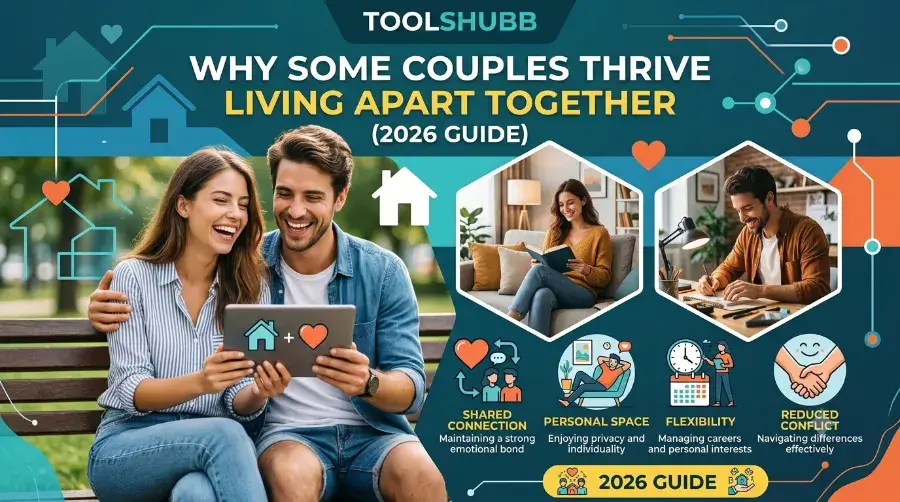
A Quick Look at the Data
For a simple visual you can drop straight into your own page, here is a lightweight HTML and CSS bar chart summarizing the core statistics from this article. Copy and paste it directly into an HTML widget.
A Quick Look at the Data
Here is the same chart information written out in plain words and simple text bars, so you can copy and paste it directly without any code.
LAT Relationships: Key Figures
Married couples living apart in the U.S. as of April 2026: 4.2 million
██████████████████████████████████ (84%)
Growth in that number since early 2025: 12 percent
██████████ (24%)
Growth in married couples living apart between 2000 and 2022: 40 percent
██████████████████████████████ (80%)
Newlyweds in LAT relationships with less than a high school education: 23.4 percent
███████████████████ (47%)
Newlyweds in LAT relationships with a bachelor’s degree or higher: 9.0 percent
████████ (18%)
In simple terms, the trend keeps climbing every year, and it climbs fastest among couples with less formal education, though the lifestyle shows up across every background. Meanwhile, the overall direction is unmistakable. More couples are choosing separate homes on purpose, not by accident, and the numbers only continue moving upward year after year.
Frequently Asked Questions
Is living apart together the same as long distance dating?
Not quite. Long distance dating is usually temporary and tied to a specific reason like school or a job. Living apart together is a chosen, ongoing lifestyle for established couples.
Do LAT couples eventually move in together?
Some do, while others never do and stay happily married or partnered for decades without sharing a home. It depends entirely on what each couple wants.
Is this arrangement bad for children?
Not necessarily. Many LAT couples are blended families where separate homes actually reduce conflict for kids adjusting to a new household dynamic.
Does living apart mean the relationship is less serious?
No. Commitment is measured by how partners treat each other, not by a shared address. Plenty of LAT couples are married and deeply committed.
Can living apart together improve intimacy?
Yes, for many couples. Since time together becomes intentional rather than automatic, some partners report feeling more connected than they did while cohabiting.
Test Your Knowledge: Living Apart Together Quiz
1. What percentage increase in married couples living apart did the Census Bureau report between early 2025 and April 2026?
A) 5 percent
B) 12 percent
C) 25 percent
2. According to the BGSU family profile, which group of newlyweds had the highest share of LAT relationships?
A) Newlyweds with a bachelor’s degree
B) Newlyweds with less than a high school education
C) Newlyweds in their third marriage
3. What is one commonly reported benefit of living apart together?
A) Constant daily conflict
B) More intentional quality time
C) Less financial independence
4. Between 2000 and 2022, how much did the number of married couples living apart grow?
A) Over 40 percent
B) About 10 percent
C) It stayed flat
5. What personality trait tends to make LAT arrangements more challenging?
A) Strong independence
B) Anxious attachment style
C) High income
Answer Key: 1-B, 2-B, 3-B, 4-A, 5-B
Conclusion
At the end of the day, love does not require a shared mailbox to be real. Some couples thrive living apart together because the arrangement protects the very qualities that first drew them to each other, independence, individuality, and intentional connection. Meanwhile, the data backs this up clearly, showing steady, real growth in couples choosing separate homes rather than treating it as a fallback option. Ultimately, whether this lifestyle fits your relationship comes down to knowing yourself, communicating openly with your partner, and being honest about what actually makes both of you feel secure and happy.
References
- U.S. Census Bureau, “New Data Show Characteristics of Opposite-Sex Couples Who Lived Together in 2025,” census.gov, 2026
- National Center for Family and Marriage Research, Bowling Green State University, “Married and Living Apart Together,” Family Profile No. 27, 2025
- National Center for Family and Marriage Research, “Married and Living Apart Together,” Family Profile FP-20-15
- NPR, “The Lessons Couples Learn From Living Apart Together,” 1A, February 2025
- The Midst Substack, “The Case for Living Apart from the One You Love”
- Psychology Today, Couples Thrive column
- Journal of Communication, long-distance relationship quality research